













Sportuna Casino Login In Italy

In 2026 Sportuna is available in Italy and mobile access works best when profile, time, and account are already clear.

Fortune Gems 2 Slot

Table of Contents

  • The Dog House Megaways Slot
  • Lucky Joker 10 Extra Gifts Slot
  • Sword of Ares Slot
  • Floating Dragon Hold & Spin Slot
  • Leprechaun Riches Slot
  • Fruit Cocktail Slot
  • The Dog House Megaways Slot
  • Sword of Ares Slot
  • Fruit Million Slot
  • The Dog House Megaways Slot
  • Big Fisherman Slot
  • Big Fisherman Slot
  • Seven Books Unlimited Slot
  • Sportuna Fortune Slot
  • Sword of Ares Slot
  • Floating Dragon Hold & Spin Slot
  • 9 Mad Hats Slot
  • Floating Dragon Hold & Spin Slot
  • Big Bass Splash Slot

How Sportuna Login Works On Mobile

Using a platform from a smartphone doesn't just mean reducing everything to a smaller screen. The pace of interaction with your account changes completely. Open, check, choose, exit. Every gesture is faster, and for this reason, it requires a minimum of extra order. In 2026, this detail matters a lot, because for many users, the phone is the primary device, not the "emergency" one.

Login 1

Imagine a common scene. You're out and about, you have ten minutes, you open your profile and want to understand immediately if everything is in order. Usually, the most attentive players do this: they look at the balance, check if there are any useful notifications, see if the account is in order, and only then decide whether to really start. This small initial ritual avoids half the confusion that arises when entering in a hurry.

The platform is available in Italy for adult users and must be used in compliance with applicable rules and personal limits. For this reason, accessing from a phone should never become an automatic gesture. The easier it is to enter, the more a simple criterion is needed to avoid turning a quick visit into a prolonged session.

Quick But Not Hasty Access

Speed alone is not enough. If the fields are clear but you're doing three things at once, the risk of making a mistake still increases. Think about when you open your account while responding to a message or scrolling through other apps. At that moment, it takes very little to touch the wrong screen or misread information.

Players who use their phone best usually don't try to do everything at once. They enter, observe, understand where they are, and only then begin. It's a very simple approach, but it works because it reduces the number of confused decisions in the first few minutes.

Where It's Worth Looking As Soon As You Enter

As soon as you enter, the most useful part to check isn't necessarily the games. It's often better to check the account, recent history, and personal section first. Imagine wanting to have a short session before leaving. If you understand where you are immediately, you move well. If, instead, you start searching through menus one by one, time runs out before you've really decided what to do.

This is especially true on mobile. The reduced screen doesn't forgive dispersion. A readable profile, with clear sections and consistent paths, saves you mental energy. And this, in online gaming, counts almost as much as available time.
Sportuna Casino Login And First Entry

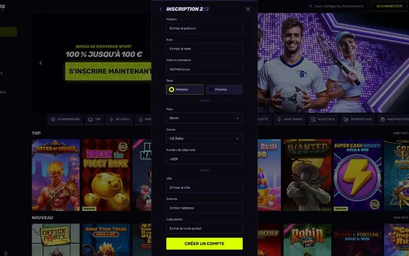
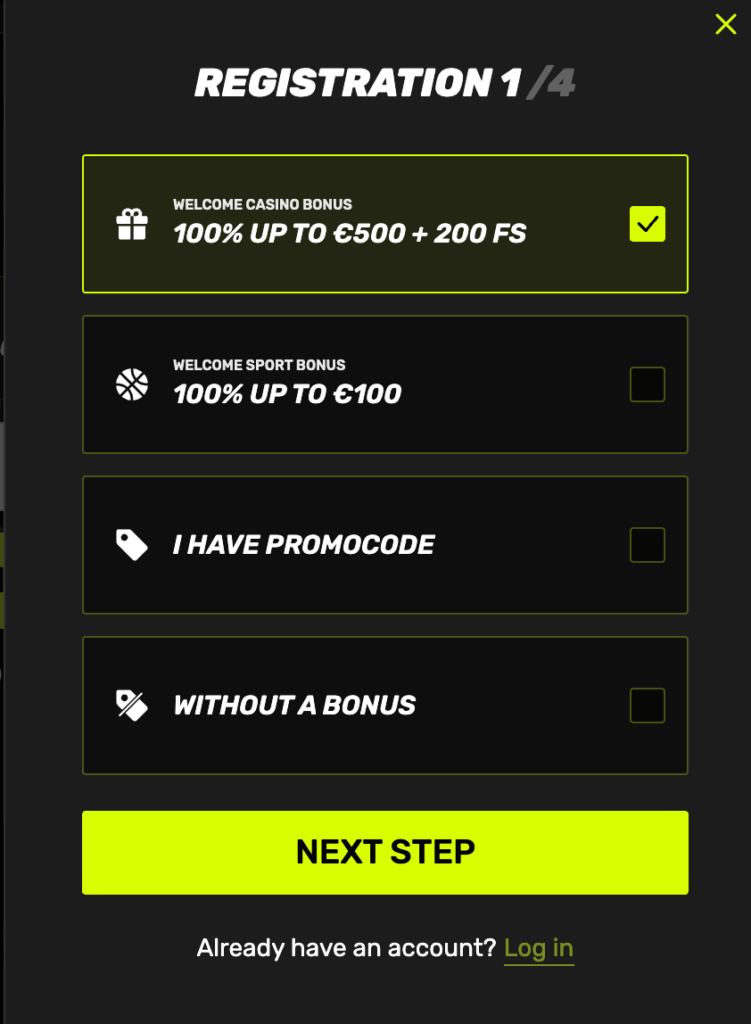
The first entry after registration is a moment many underestimate. It's thought that the important part starts later, perhaps when moving to the balance or lobby. In reality, this is where the first real impression is formed. If the account starts out organized, with correct data and well-understood steps, almost everything else becomes simpler.

Login 2

Imagine creating your profile while receiving notifications and switching screens two or three times. It's a very normal situation. However, it's precisely there that the most trivial errors arise: incorrectly entered contact details, incomplete data, checks skipped because "I'll get back to it later." Usually, those who usa their account with more common sense take a few full minutes, do one thing at a time, and check carefully before closing the initial phase.

After registration, it's not advisable to start a session right away. It's much better to take a tour of the personal area, understand where payments, history, support, and control tools are located. This initial orientation seems unimportant, but it avoids a lot of friction later on, especially when entering from a phone with little time.

If the device is only yours, protected, and used with order, the entire process becomes more linear. If, however, you share it or use it in more chaotic contexts, more caution is needed. The mobile experience depends not only on the platform but also on the context in which you use it.

Registration And Data To Verify

The most delicate part is not writing the data, but rereading it. A wrongly entered number or an imprecisely written contact detail might not cause any problems at first, but then resurface at the least convenient moment. Imagine wanting to quickly fix your account before a session and discovering that a detail needs correction. It's a preventable waste of time.

For this reason, many more cautious users immediately check their name, contacts, profile access, and essential settings. They don't do it out of paranoia, but for practicality. The fewer errors you leave at the beginning, the fewer corrections you'll have to make when you just want to use your account peacefully.

Navigation, Lobby And Short Sessions

Navigation on a smartphone requires a different approach than on a desktop. On a computer, you can afford to open multiple sections, keep everything under control with more space, and easily compare different areas. On a phone, however, it's best to choose a precise direction and follow it. One category, a few filters, one decision. This helps avoid turning the search into too long a part of the session.

Login 3

Imagine a normal evening. You have fifteen minutes and want to enter, choose something, and leave without complicating things. If you start changing categories every twenty seconds, time runs out before you've even made a sensible decision. Usually, more organized players start from their own context: today I just want to check my account, today I want a short session, today I prefer just to explore. From there, everything becomes simpler.

Another useful thing is to distinguish between curiosity and choice. On the phone, it's easy to confuse the two and keep scrolling just because the interface is fast. But scrolling isn't deciding yet. If the account allows you to quickly find what you really need, the experience improves significantly.

How To Choose A Game From Your Phone

The best way to choose on mobile is to start with the real-time you have available. If you have a few minutes, entering a too broad or dispersive section doesn't help you. Imagine wanting to do everything quickly while waiting for a friend. At that moment, the smartest choice isn't the most stimulating one, but the one most consistent with the context.

Usually, those who maintain control choose the type of session first and only then the content. This way, the phone remains a practical tool, not an invitation to wander aimlessly through different screens.

Why Rhythm Matters More Than Speed

Speed alone can be misleading. If everything opens instantly but leads you to touch too much and think too little, the account becomes less clear, no longer convenient. Think of a session that was supposed to last ten minutes and drags on just because every step seems too easy to stop.

The right pace, on the other hand, accompanies you without pushing you. It allows you to understand where you are, to see the balance effortlessly, to move from one section to another calmly. This is the kind of experience that, in the long run, truly matters in a serious evaluation.

Payments, Verification And Account Management

The financial part requires more clarity than any other. Deposits, balance checks, any verifications, and withdrawal requests should never be treated as steps to be done "on the fly" between one notification and another. The phone makes everything fast, but speed only helps if your head is calm. The most useful method remains the same: first the profile, then the history, then the chosen method, and only at the end the confirmation of the operation.

Imagine you have just finished a session and want to settle the account immediately. If you open the payments section without a clear goal, you easily end up touching more screens than necessary and going back several times. More organized players do the opposite. First, they figure out if they need to verify, deposit, or simply check. Only then do they enter the relevant section.

Another important point concerns the distinction between real balance, recent movements, and any promotional items. If you look at them as if they were the same thing, you risk misreading the account from the first few minutes. A platform is truly clear when it allows you to separate these levels effortlessly. And this, on mobile, is even more true.

Profile verification also needs to be prepared in advance. Waiting until the last moment rarely helps. Illegible photos, inaccurately entered data, or hastily uploaded documents make operations that would be simple with better preparation more burdensome. Five full minutes, without distractions, are enough to avoid a huge number of small problems.

In practice, many financial errors do not stem from the complexity of the account, but from the wrong context in which you try to manage it. If you are tired, in a hurry, or doing something else, even a straightforward step seems more difficult.

Aspetto Del Conto

What to Check

Why It's Useful

Profilo personale

Dati coerenti e recapiti aggiornati

Riduce correzioni nelle fasi delicate

Storico operazioni

Movimenti recenti e riepilogo chiaro

Aiuta a leggere la situazione reale

Chosen Method

Compatibilità con il conto

Evita passaggi ripetuti

Documents

Legible images and complete information

Previene invii multipli

Momento dell’operazione

Tempo e attenzione disponibili

Limita errori dovuti alla fretta

Personal Limits, Breaks And Responsible Use

The most important part of a session is not what you choose, but how you manage to stay within the boundaries decided beforehand. If you don't define a budget and duration, even the best interface in the world isn't enough to protect you from confusion. The phone makes everything faster, and precisely for this reason, it requires a clearer personal structure.

Imagine an evening where you log in almost out of habit. You have your phone nearby, open your account, and plan to stay for a short while. If you haven't decided in advance how much you want to use and when you want to leave, the risk of extending the session immediately increases. Usually, the most responsible players start with two concrete numbers: maximum amount and maximum time. From there, they build everything else.

You don't need a complicated system. Sometimes very simple rules are enough: an amount separate from daily expenses, a scheduled break, and the decision not to return immediately after leaving. These are practical tools, not symbolic ones. And they work precisely because they reduce improvisation.

Signs Not To Ignore

There are small signs that are worth recognizing quickly: you check the balance too many times, you change screens for no clear reason, you postpone leaving or stay longer than planned. Imagine a session that was supposed to be short and continues only because each subsequent step seems easy. It is precisely there that attention is needed.

The most disciplined players don't wait for the situation to become obvious. They quickly recognize when the rhythm changes and stop before. It's a subtle difference, but enormous in the long run.

When To Take A Real Break

A real break isn't staying with the account open while you look at something else. It's truly exiting, putting down the phone, and interrupting the flow. Consider a common scenario: you think you'll stop for a moment, but you keep the account open and your gaze returns to the screen. In that case, you haven't really stopped.

This is why many more attentive users set clear breaks and respect them as part of the session. Not as advice, but as a real step. It's one of the simplest ways to keep the experience adult, conscious, and readable.

Support, Common Problems And Profile Exit

Support becomes truly useful when you arrive with a well-described problem. Simply saying something is wrong helps little. It's much better to explain what you were doing, which screen you were on, which device you were using, and what checks you have already performed yourself. This precision almost always shortens the path to a useful answer.

Imagine not seeing in your account what you expected after a session. Before getting agitated, retrace your steps. Did you check the history? Did you read the summary carefully? Did you check if the problem always appears in the same place? The history is one of the most useful areas precisely for this: it shows you the facts, not just your memory of the session.

Even exiting the profile matters. An organized session ends with a review of the summary, the time used, and the budget respected, followed by a true account closure. It seems like a small detail, but in the long run, it makes a big difference.

How to Write to Support Usefully

The best message is short but precise. Explain what you were doing, at what point the problem appeared, what phone you were using, and what you have already tried to do. Imagine wanting to solve everything in a few minutes. A clear request is almost always worth more than three confused messages.

Usually, support can be most helpful precisely when it receives a concrete description. If you can tell the context well, half the work is already done.

FAQ

A useful evaluation doesn't start from a generic score, but from the player's real journey. You need to look at how access works, if the account is readable, if the history is understandable, if support is easy to find, and if the smartphone version holds up to daily use. When you imagine someone logging in for a few minutes and still managing to orient themselves without difficulty, you immediately understand whether the platform was built logically or not.

It depends on what you need to do and how much attention you can dedicate at that moment. The phone is very practical for quick checks and short sessions, while a larger screen can help when you need to re-read data, better observe a summary, or manage more delicate operations. The best choice is not the fastest device overall, but the one that allows you to make fewer mistakes in the real context you are in.

It's worth looking at your profile, recent history, the method you want to use, and the time you intend to dedicate to the session. This order avoids one of the most common mistakes, which is making a financial transaction without really deciding on the context. If you already know how much you want to use and why you are logging in, read your account better and act with less haste. It's a brief but very useful preparation.

The best time is before they become urgent. If you wait until the last phase, the haste increases, and any illegible image risks making you waste time. Preparing everything in advance, at a quiet moment, with good light and full attention, almost always reduces hitches. It's one of those tasks that seem tedious but then save you a lot of effort when the account really needs managing.

Usually, the signs are concrete. You check your balance too often, change screens for no clear reason, postpone leaving, or stay longer than planned. When you notice these behaviors, the best choice is to stop and take a real break. The most attentive players don't wait for the disorder to become evident. They recognize it early and act sooner, precisely because they know their rhythm well.

Because it shows you the facts and not just the memory of the session. If you have a doubt about a transaction or a step you think you have already completed, the history is often the most useful point to check. It helps you reconstruct what really happened and also makes communication with support much clearer. That's why it's one of the most important areas of your account.

Because the quality of the session is also seen in how it ends. Reviewing the summary, checking if you respected your time and budget, and truly closing the profile helps protect both the account and your personal rhythm. Many useless logins arise from sessions left suspended, on the phone or in your mind. A good closing makes everything clearer for the next visit too.