













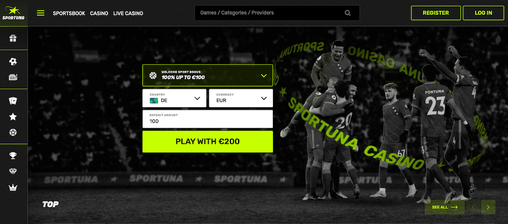
Sportuna Casino Review In Italy

Practical 2026 overview of account, payments, mobile gaming, assistance, and profile management for adult users in Italy.

Fortune Gems 2 Slot

Table of Contents

  • The Dog House Megaways Slot
  • Lucky Joker 10 Extra Gifts Slot
  • Sword of Ares Slot
  • Floating Dragon Hold & Spin Slot
  • Leprechaun Riches Slot
  • Fruit Cocktail Slot
  • The Dog House Megaways Slot
  • Sword of Ares Slot
  • Fruit Million Slot
  • The Dog House Megaways Slot
  • Big Fisherman Slot
  • Big Fisherman Slot
  • Seven Books Unlimited Slot
  • Sportuna Fortune Slot
  • Sword of Ares Slot
  • Floating Dragon Hold & Spin Slot
  • 9 Mad Hats Slot
  • Floating Dragon Hold & Spin Slot
  • Big Bass Splash Slot
Reviews 1

How To Read Sportuna Reviews In The Daily

Reading an online evaluation seems easy until you try to turn it into something useful. The point isn't finding opinions. The point is understanding which ones truly help an adult user who wants to use the platform critically. In 2026, it makes more sense to observe concrete steps – account opening, profile clarity, payment management, phone usage, pause tools – rather than stopping at the first impression or a hastily written phrase.

Imagine a normal scene. You have twenty minutes of free time in the evening, you open the platform, and you want to understand if the account is manageable without getting lost in the menus. If in those minutes you find balance, history, settings, and support, the initial judgment improves. If, instead, you spend time searching for where a simple function is located, even a visually tidy environment quickly becomes burdensome.

Molti cercano un giudizio netto, quasi da semaforo: sì o no. Però l'uso reale non funziona così. Una piattaforma disponibile in Italy per utenti adulti va letta dentro il comportamento quotidiano di chi la usa, non dentro uno slogan. Può sembrare intuitiva all'inizio e complicarsi quando bisogna rileggere un movimento. Oppure può apparire sobria nei primi minuti e risultare molto più solida quando la si usa per qualche giorno.

What Sportuna Casino Review Shows In The First Few Minutes

A review becomes useful when it tells what really happens as soon as you enter. Is the account readable? Is the balance visible immediately? Is the history accessible without guessing the right menu? Is the support area clear or does it seem hidden? If you enter in the evening, tired, and can still orient yourself in a few minutes, that detail is worth more than many generic praises. The first contact with the account already says a lot about the relationship you will have with the platform afterward.

Imagine two users. The first opens the account, touches three random sections, and decides it's "okay." The second checks the balance, notifications, profile, and transactions before doing anything else. After a week, the second will have a much clearer idea. Not because they read more, but because they observed better.
Registration, Profile, and First Verifications

Registration should be quick, but not hasty. Name, contact details, date of birth, credentials, and initial preferences must be consistent from the start. Truly annoying errors rarely arise from complex steps. They arise from tiny details: a misspelled email, a number no longer in use, a password saved carelessly, or a field left on automatic without re-reading it.

customer feedback 2

Imagine filling everything out on your phone while doing other things. This is the most common situation where the importance of a detail is underestimated. Nothing happens at the moment. But then, just one return to the computer, a request for a check, or a doubt about a transaction makes you realize how much time those small oversights cost.

For this reason, once the account is created, it's advisable not to jump straight into the catalog. More organized players first go to the personal area, check where documents, history, support, notifications, and limits are. It's a not-so-spectacular but very practical routine. And above all, it avoids having to reconstruct everything later, when patience is already lower.

When Sportuna Review Really Helps

A good review is especially useful here: at the moment you need to understand if the profile is designed to be used by real people, not just to look tidy on a promotional screen. If the personal area allows you to read data, contact details, recent transactions, and notifications without confusion, then the account starts well. If, on the other hand, you have to memorize where every function is, the experience becomes cumbersome even without a real technical problem.

Small Errors That Waste Time

The most common errors don't make noise, but they consume time. A secondary email you don't check often, an old number, a poorly legible file, or a password you can barely distinguish when you need to re-enter it. Taken one by one, they seem like trivial details. Put together, however, they turn every future operation into something slower than necessary.

Imagine completing everything in the evening and returning the next day with the idea of a quick login. If you discover at that moment that a contact detail is missing or that you need to recheck a piece of data, the fault is almost never the "complicated system." It's usually the result of a registration done too quickly.

3 reviews

Payments, History, and Choices Made More Calmly

Payments are where theory ends. Until then, everything can seem simple: clear menus, readable account, organized catalog. But when you need to deposit, re-read the balance, or request a withdrawal, the quality of the experience becomes concrete. It's in this phase that you understand if the account was set up well or if there are pending details that finally start to weigh.

The most useful rule is also the most ignored: stop for thirty seconds before confirming any operation. Amount, selected method, account status, and the real reason for the choice. Four quick checks. They seem trivial, but almost everyone skips them when the decision is driven by haste or an attempt to adjust the session's tone with an impulsive gesture.

Imagine a somewhat confused late evening. You still have your phone in hand and feel like making another financial transaction just to change the pace. In that case, the problem isn't technical. It's the moment you are deciding. A brief reread, done with a clear mind, avoids many useless choices.

Area To Check

What To Verify

Why It's Useful

Profile

consistent data and active contact details

avoids last-minute corrections

Chosen Method

header and actual availability

reduces unnecessary attempts

History

ultimo movimento registrato

chiarisce lo stato del conto

Documents

readable and complete files

facilitates necessary checks

Personal limits

spending limits and breaks

maintains order in the session

What To Look At Before Confirming

Before a transaction, it's advisable to check the available balance, the chosen amount, the active method, and the status of the recent history. It all seems obvious, but almost everyone skips at least one of these steps when they are tired or distracted. If you are talking to someone while touching the screen, the probability of misreading a warning increases immediately. This is why financial transactions should be managed in neutral moments, not in the middle of other things.

Imagine realizing at the last moment that you don't remember why you were making that deposit. That's already a sign. When the reason for the choice is no longer clear, stopping is almost always more useful than confirming.

Phone Use, Real Time, and Short Sessions

In 2026, many users access more often from mobile than from computer. For this reason, it's not enough for the platform to exist on the phone. It must be convenient in the real contexts where the phone is used: short breaks, waiting times, commutes, evenings on the sofa, quick checks before going out. In those moments, quality is measured by readability, speed, and clarity of the main functions.

Imagine having ten clear minutes while waiting for someone. You want to see your balance, recent transactions, any notifications, and understand if you really have time for a session. If a few taps are enough to orient yourself, the mobile works. If, on the other hand, each area requires unnecessary steps, the phone stops being helpful and becomes a source of distraction.

Continuity with the computer is also very important. Not everything needs to be identical, but the account should maintain the same logic. Balance, profile, history, support, and payments should be in easily recognizable areas in both cases. Otherwise, the user feels like they are using two separate environments, and each login requires a new orientation effort.

More organized users access from their phone with a specific purpose, not out of habit. They check their account, decide, act, and then leave. This small difference changes a lot. Mobile is convenient precisely because it shortens time, but if a clear objective is missing, convenience easily turns into distraction.

How to Access From Your Phone Without Confusion

When you have little time, it's best to use your account like a dashboard, not a showcase. First balance, then notifications, then history, then decision. If you log in during a short break and already know what to check, time is sufficient. If, instead, you start tapping through screens without order, ten minutes easily become thirty, and the account stops seeming linear.

When to Take a Break First

The signal isn't always economic. Sometimes it comes earlier, in the form of haste, irritation, or the desire to recover immediately. Imagine telling yourself "just a moment longer" multiple times within the same fifteen minutes. That's already an indication. At that point, a short break or a complete logout is worth more than another attempt made out of nervousness.

Usually, the right time to stop doesn't come when everything is already out of control. It comes a bit earlier, when you feel you are already losing clarity. Recognizing that point is one of the most useful skills for those who want to use their account wisely.

Support, Limits, and Control Tools

Support seems secondary until you really need it. Then, when a login fails or a transaction is unclear, it becomes a central part of the experience. The most useful message isn't the longest one. It's the most precise one. You need to state what you were doing, on which device, in which area of the account, at what time, and with what on-screen alert.

Imagine writing only "it doesn't work." You'll probably have to explain everything from scratch. If, instead, you arrive with the facts in order, the conversation starts much more concretely. The most practical users do exactly this: they gather the details first and then ask for help.

Alongside support are self-control tools. Spending limits, temporary breaks, suspensions, and similar functions should not be seen as a last resort. They are a normal part of adult account usage. They help maintain control of the session when the game risks becoming more automatic than chosen.

Imagine a stressful week where you notice yourself opening the account more out of reflex than choice. At that moment, a short break can help much more than another attempt to "do better." The advantage isn't in forbidding, but in restoring clarity.

How to Write to Support Usefully

The best way is to start with the facts. What were you doing, in which area were you, which device were you using, at what time, and with what message on the screen. Imagine having to clarify an interrupted login or a hard-to-read transaction. If you have already gathered this information, you save yourself time and make the work of the person responding easier.

How to Make a Realistic Assessment

In the end, a serious judgment of a platform almost always arises from the same elements: access, profile organization, clarity in payments, mobile quality, presence of break tools, and usefulness of support. Everything else comes later. This doesn't mean visual appearance doesn't matter, but it means it matters less than many think when they actually use the account for more than just one evening.

Imagine a normal week: a few mobile logins, an evening session, a check of transactions, a moment when you need to stop. If in all these situations the account remains readable, the overall judgment improves for practical reasons. If, on the other hand, each login requires reconstructing everything from scratch, the effort accumulates, and the general impression worsens even if technically everything seems to work.

For an adult user in Italy, the final question remains very concrete: does this platform truly leave you in control, or does it push you to improvise? If the answer is the former, then the rating increases because the account holds up in real moments, not just on paper.

FAQ

The most useful thing is to immediately check the areas you will actually use: balance, profile, history, notifications, payments, and pause tools. If you can find everything effortlessly and without having to guess menus, the account starts off well. It doesn't need to be spectacular. It matters more that it's readable in the first few minutes and during real daily moments.

It's worth doing often, not just when a problem arises. The history helps reconstruct amounts, times, and the order of operations, but it also helps understand if the session followed the initial plan or not. For those who log in from mobile at multiple times during the week, it's a very useful tool for not mixing everything up.

It depends on the task and the moment. The phone is practical for quick checks, notifications, balance, and essential steps, while the computer often helps to read the profile and history more calmly. Neither is always better. It matters more to use the right device for what you really want to do.

The most practical solution is to separate a specific amount from other expenses and also associate it with a time limit. This way, you control not only the money but also the duration of the session. A simple and sustainable plan almost always works better than an overly ambitious rule that fails at the first bad evening.

Usually, useful signs arrive sooner than expected. You start clicking without reading, check your balance too often, extend the time beyond what you decided, or feel the urge to recover immediately. You don't need to wait for a major incident. The right time to stop often comes in the form of haste and repetition.

It is best to have consistent personal data, active contact details, a password you can remember, and a clear idea of your personal budget ready. It may not seem like much, but this preparation makes almost everything that follows easier: access, verification, payments, and general account management.

The best way is to be brief but precise. You need to state what you were doing, on which device, in which area of the account, at what time, and with what message appeared on the screen. This makes the request much more useful and reduces lost steps. A generic message, on the other hand, often forces you to start over.